
Red
Ages 4–8, and adult beginners
- Court
- 36 × 18 ft
- Net
- 2 ft 9 in
- Ball speed
- 25%
- Racquet
- 19–23 in
Tracking, hand–eye, footwork, forehand, backhand, serve and volley, and the first real rally.
Greater Houston · Since 1952
Adult leagues, junior programs, sanctioned tournaments and free youth tennis, in neighborhood parks and at clubs across Houston.

Nineteen fifty-two — two thousand twenty-seven The Diamond Year
Three generations of this city learned the game on Houston courts. We would like you with us for the seventy-fifth.
Where do you start?
Whether you’re five or seventy‑five, brand new or match ready, there’s a place for you on a Houston court this season.
 18 and over
Never picked up a racquet? Adults start on the red ball too. Played years ago? There are thirty‑one league divisions by level and night.
Adult tennis Ages 4–18
Children start on the red ball and move up through orange and green as they grow, on courts sized to fit them. Lessons first, then team play.
The junior pathwayOn the calendar
Upcoming & open for registration
Free academic and life-skills classes for ages 6–18 at five tennis sites, beside the tennis hour.
After-school and home-school classes at eight neighborhood park sites, with Houston Parks & Recreation.
Our longest-running student fundraiser, held every fall since 2015.
Level 5 Open at Memorial Park and Lee LeClear. Tournament 26-45775.
Across every fall Junior Team Tennis division.
12–18 singles, plus the 10 orange and green ball circuit on the Saturday.
Singles and doubles. Tournament 26-31270.
Site to be confirmed.
Newk's Tennis Ranch, for teams advancing out of the fall season.
The Diamond Year gala at The InterContinental Houston.
Fall leagues are under way. HTA Fall runs September 14 to November 22. Find a division.
From the newsletter
One email a month, mostly about people. Someone from the HTA team writes the opening. The rest is players.
Nearly 4,000 Houston players read it. Unsubscribe any time, in one click.
On social
Four accounts, each doing a different job. Follow whichever one fits.
Tag us in your match photos and we will share them. Most of what is on our feed came from players.
Where to look things up
Schedules, draws and standings are maintained by the USTA. We link to them rather than copy them, so what you see is current.
1952 – 2027 · Our seventy-fifth year
One name for our seventy‑fifth year, the fifteenth gala, and everything we raise in between. It opens on gala night and runs to the end of 2027.
Until the fifteenth
Saturday 6 February 2027The InterContinental Houston
Memory Wall
A first lesson in a neighborhood park. A league final under the lights. The coach who saw something in you. We are gathering the memories of everyone who has played, coached, volunteered and cheered in Houston tennis since 1952.
A few lines, the year, and a photo if you have one. Every memory is read by our staff before it appears on the wall.

From our courts
Our partners

Kids' Day runs with the U.S. Men's Clay Court Championship at River Oaks. La Roche-Posay brings sun protection to the park sites. The USTA and the USTA Foundation fund the NJTL programming. Every one of those relationships started as a conversation.
With gratitude to our partners


Their support keeps Houston on court, from our leagues to our youth programs.

Home / Start here
Most people who want to play stop because they cannot work out which program is theirs. Answer these and we will name one, with the next step attached.

Home / Play
Never held a racquet, want a team on Saturday mornings, or dusting off a bag from ten years ago. There is one way in from here.
Start here
Beginners — every age
Adults who quit tennis the first time usually succeed with red ball.
Red ball is the entry point for novices of every age, children and adults alike. The ball moves at a quarter of full speed and stays up long enough to be struck properly; the court is thirty-six feet instead of seventy-eight.
How red ball works
League play
A lesson finishes. A league keeps going.
A captain who texts, a court time that repeats, and seven other people who notice when you are not there. Those three things turn a beginner into a lifelong player. League tennis is rated, so your first match is against someone at your level.
Find a team
Returning and competitive players
Nothing here asks you to begin the game again from the start.
Get a rating, enter an event, and let the season sort you into matches worth driving across town for. Juniors starting out have their own circuit, the Junior Gran Prix, with a points series of its own.
See competition
The player pathway
Drawn to scale. Ball speed, court size, net height and racquet length step up together, so nobody covers ground they cannot reach.
Ages 4–8, and adult beginners
Tracking, hand–eye, footwork, forehand, backhand, serve and volley, and the first real rally.
Ages 8–10
Topspin, the continental grip, flat and slice serves, approach shots and overheads. The all-court player appears.
Ages 10–12
Advanced movement, slice as defense and approach, early kick serve, patterns of play, and the mental game.
Ages 12 and up
The same ball, court and equipment used from a Tuesday night league to Wimbledon.
Tennis is a sending and receiving game, so players are paired up rather than stood in lines. The goal is a lifelong player, not a fast start.
Why we do not skip stages
It is tempting to push a child who is tall, athletic or simply impatient to play "real tennis". Real tennis is played at every ball color, on every court size.
Each stage builds specific technical habits: grip, footwork, timing. They are far harder to correct later than to teach correctly the first time. A skipped stage shows up years on as a flaw that will not go away.
Faster balls and bigger courts before coordination and strength have caught up produce poor form and avoidable injury. The player struggles, and then stops.
Moving up at the right pace builds competence, and competence makes a child want more. Pushed too far ahead, they get frustration instead of motivation.
Not every player moves through green ball at the same pace, and that is by design. A yellow ball is full compression. Struck with pace and spin it bounces wider and higher, which makes the same court play bigger. That is why the skills have to be in place first.
PlayTracker
PlayTracker is the USTA's record of a young player's progress through red, orange and green. Point totals appear on your family's USTA.com account, so you can check them at any time.
Earned through competition at the orange stage.
At least 1,000 of them must come from match wins.
Coaches generally recommend at least a year at red, and younger children often need longer.
Players age out of PlayTracker at eleven and move into the standard yellow-ball competitive pathway.
Competition formats
Not every event is a tournament, and that is deliberate. This is the order players move through.
The entry point for a player who has never competed. A child needs to rally two or three balls; the focus stays on rallying, serving and keeping score inside the lines. Matches are timed, often with a modified tiebreak so everybody serves plenty. Coaches and parent volunteers help with the score, and every point won goes to the team total.
A more independent step for orange and green players still building confidence. Teams of three or four, timed matches, rotating between singles and doubles, with coaches roaming the courts for scoring and tactics. It is the natural bridge into Junior Team Tennis.
For players who can rally, serve and score with very little help. JTT runs as a season with a captain and parent volunteers. Four to six players to a team, singles and doubles, every win counting toward the team score, and good sportsmanship from players and parents is part of the format.
One-day individual events with round-robin matches in singles, doubles or both. Orange and green ball. Players who accumulate enough PlayTracker points here become eligible to move up a ball color. Gran Prix is HTA's name for Junior Circuit play. It is our branding, not a separate format.
Everything under Play

The entry point for novices of every age. A slower ball, a shorter court, and a rally in your first hour.
Who is playing?
A slower ball on a shorter court, so a complete beginner rallies properly within the hour instead of spending a month missing. Children and adults each have their own hour, back to back on a Wednesday.
Racquets lent if you need one. No experience, and nothing to buy first.
For anyone who has never played, or tried once and gave up. You will rally in the first hour.
Why it works
Adults who quit tennis the first time usually succeed with red ball.
Three things are smaller than in the game you have seen on television, and each one buys the beginner time.
A quarter of the compression of a yellow ball. It travels slower and bounces lower, so a new player has time to reach it and hit a full, proper stroke on day one.
Shorter and lighter, so there is less racquet to manage. Players strike the ball more accurately from the start.
Thirty‑six feet instead of seventy‑eight. Less than half a regulation court, and a court a beginner can already cover.
Slower ball, shorter racquet, smaller space. Put together, a beginner sustains real rallies immediately instead of chasing balls around a full court because the rally broke down. Players are paired up rather than stood in lines, because tennis is a sending and receiving game.
The goal is a lifelong player, not a fast start.
Five years old, or fifty
The game is scaled to a child’s size, so they rally and build correct form from day one without frustration. They hit naturally instead of fending off a ball bouncing over their heads.
Equipment that fits prevents the bad habits that come from equipment that does not. The games build balance, agility and coordination, and the children do not notice they are learning.
Play starts immediately. Many adults tried tennis once and quit because learning to rally was too hard, and they come back to find it works at the first attempt.
Plenty are happy staying on red, and there is no hurry to leave. The step after is our adult programmes and the leagues, played with the standard yellow ball. That is a real jump in speed, so take the time you need on red first.

Red Ball Team Challenge
Teams are assigned by ability rather than age, so a first match is played against someone at the same stage.
Players turn up each week and are placed on a team for the day. A block runs three to six weeks, so a beginner commits to a few weeks rather than a year. Racquets and balls are provided.
Team captains and parent volunteers monitor the courts, helping players keep score and run their own matches. Players serve and score across singles and doubles, and every point won goes to the team total.
Effort, responsibility, teamwork and sportsmanship run through every session. Winning matters less than progress. Doing your best, playing fair and being a good teammate is the point.
Monitoring a court is also how a parent sees how much responsibility their child is already carrying.
The Challenge feeds into Red Ball Junior Team Tennis, where four to six players join a team for a season and play round‑robin. Same camaraderie, a level up. Players keep score and manage their own court.
Running now
10771 Westpark Drive, Houston 77042
$30 for three sessions
10771 Westpark Drive, Houston 77042
$30 for four sessions
3535 Briarpark Drive, Houston 77042
$60 for four sessions
Sessions as listed on USTA Serve Tennis, October 1 2026. Dates and prices change each term. The live list is always current.
For parents
Nineteen to twenty-three inches at the red stage. If you do not have one, tell us. We would rather lend a racquet than lose a player.
Trainers with a flat sole, a hat, water. No whites, no club dress code, nothing to buy first.
Players are partnered from the start. Expect noise, movement and a lot more balls struck than a lesson format allows.
The court is for you. Leagues, tournaments and beginner sessions for players who finished school a while ago.
Four ways adults play here
Adult beginners
Adults who quit tennis the first time usually succeed with red ball.
The reason most adults give up is not fitness or coordination. It is that a full-speed ball on a full-size court gives a beginner no time to swing properly, so the first month is spent missing. Red ball removes exactly that problem: a quarter-speed ball, a thirty-six foot court, and a rally inside your first hour.
It is not a children's program that adults are tolerated in. Novices of any age start here, and it is the fastest honest route from never having played to holding your own in a doubles line.


Who to ask
Two people run the adult leagues, and it is worth knowing which one to write to.
Melinda Hampton places players. If you do not know anyone yet, start with her. Tell her your level, your side of town and the nights you can play, and she will tell you what has room.
Ann Wilde runs the divisions, the schedules and the season calendar. Questions about which division you belong in, whether your rating is right, or starting a team of your own go to her.
Or call the main line, (281) 580‑8313. Ann is extension 1003, Melinda 1004. Already know your division? Find it and register.
What a season looks like
A rating and a division, so the first match is against somebody who will test you rather than flatten you.
Doubles lines, a captain who texts, and seven other people expecting you. This is the part lessons cannot replace.
Not because of a breakthrough, but because you played thirty matches. That is how it works at every age.

Also open to adults
Where adapted and wheelchair divisions run, they sit inside the standard adult leagues and sanctioned draws, on the same calendar as everyone else. The programming itself is coordinated by USTA Texas rather than by us.
Away from competition, the US Open Watch Party, Kids' Day volunteering and the Game Set Match Gala are where Houston's adult tennis community actually meets.

What they say about us
Three captains, on why they keep bringing a team back.
“Of course, none of this would be possible without the support of HTA/USTA. They do an excellent job organizing league play, and it is often a thankless undertaking. I am so glad to be a small part of HTA and USTA.”
“I am thankful to have the team we have and appreciate HTA for creating the experience to make the leagues happen.”
“With HTA, the Houston area offers so many opportunities for tennis.”

Home / Compete / Leagues
A captain who texts, a court time that repeats, and seven other people who notice when you are not there.
Getting onto a team
Most people never join because they do not know anyone on a team. You do not have to. Write to the coordinator for your side of it and ask.
Rosters are the captains’ own. HTA runs the leagues, not the team sheets. What the coordinators can do is tell you where there is room, and bring a new roster into the right division.
USTA / HTA adult leagues
HTA runs a large and very active adult league program for players 18 and over, year-round.
There are singles, doubles and mixed-doubles offerings. Some are USTA-sanctioned advancing leagues that can lead all the way to national championships; others are local HTA-only leagues with no ladder beyond Houston. Both matter, and you do not have to choose the ambitious one to be taken seriously.
A team match is made up of multiple individual line matches, which is the detail that makes leagues work. Everybody on the roster gets court time, not just the top pair.
Juniors join the same way through Junior Team Tennis. Where adapted and wheelchair divisions run, they play alongside the standard ones.
2026 League Offerings
Ten league programs run across the year. Filter to the ones you could actually turn up for.
| Program | Division | Day & time | Lines | Playing season | Add a player by |
|---|
Nothing runs at that combination. Try widening a filter, or ask us, because a division sometimes opens on demand.
Team registration windows open months ahead of each season. The player fee is $35 across every program, and it makes you a voting member of HTA at no extra cost. What membership means.
Most playing seasons include two weeks for makeup matches before the completion deadline.
Advancing leagues run to citywide playoffs and Texas sectionals, and from there to nationals.
Ann Wilde — ann.w@houstontennis.org
Melinda Hampton — melinda.h@houstontennis.org
2026 offerings, tentative schedule as of November 17 2025. Dates shift; USTA Serve Tennis is the live record.
Live
Maintained on USTA Serve Tennis
Live data lives on USTA Serve Tennis rather than being copied here, so it is never out of date.
Rules & regulations
Full documents live under Resources.
How a Houston season ladders up
Advancing USTA leagues run from a local division to citywide playoffs, then to Texas sectionals, and from there to national championships. A player who joins a Tuesday night team in January is, on paper, four rounds from a national draw.
Not every league advances, and that is deliberate. HTA-only leagues exist for people who want the weekly match without the ladder.

Home / Compete / Tournaments
Sanctioned competition across Greater Houston, in two tracks. The HTX Serves Gran Prix Circuit is for a first competitive season, and adult draws entered by rating, so a first match is competitive rather than punishing.
Two tracks
The HTX Serves Gran Prix Circuit. Seven Level 7 events around the city for players in their first competitive season, with a points series that ends at the state sectional.
Sanctioned singles and doubles draws across Greater Houston through the year, entered by rating so a first match is competitive rather than punishing.
Where adapted and wheelchair divisions run, they sit inside both tracks. Who coordinates adapted play.
Finding a tournament around Houston
Both searches run against USTA’s own live listings, so they cover every sanctioned draw in the area, junior and adult, not only ours. Wheelchair opens our own page, because that programming is coordinated by USTA Texas rather than by us.
2026 HTA Tournaments
Every HTA-run tournament in 2026, junior and adult, with its USTA tournament ID.
| Date | Tournament | Level | Site | ID |
|---|
Nothing matches that filter.
Sites are listed as they appear on the HTA schedule: MPTC, LLTC, MCRT, LFTC. Several are also Junior Gran Prix venues.
The HTX Serves Gran Prix Circuit2026 calendar as updated January 6 2026. Entries and draws are managed on USTA Serve Tennis.
Juniors
Seven Saturdays, round robin, capped at Level 7.
Every event is restricted to beginner and intermediate juniors, draws are capped at sixteen, and the format is round robin, so a player who drives across town plays all morning rather than losing once and going home.
Points accumulate across the series. The top eight in each division are invited to the July Master's, and the top two from there represent Houston at the state sectional in September.


Adults
If the bag has been in a closet for a decade, nothing here asks you to retake the game from the beginning.
An NTRP level puts you in a draw with players who will test you rather than flatten you. Self-rate to begin and let results adjust it.
Sanctioned singles and doubles run across Greater Houston through the year, entered on USTA Serve Tennis.
One draw tells you how a weekend went. A season tells you whether you are improving, and league play between events is what keeps the level up.
Draws and entries
Entries, draws and results are managed on USTA Serve Tennis. We do not republish them here.
Why it is scored
Gran Prix participation, alongside coach recommendation, is how juniors are selected for HTA's free development camps. Competing is one of the two ways a player gets seen.

Home / Youth tennis / HTX Serves Gran Prix Circuit
Seven Level 7 tournaments around Houston, built for players entering their first competitive season, and a points series that carries them to the state sectional. Run with the U.S. Men’s Clay Court Championship as part of HTX Serves.
The partnership
HTX Serves is a tennis pathway for Houston children, formed by the Houston Tennis Association and the U.S. Men’s Clay Court Championship and announced during the 2026 tournament. The HTX Serves Gran Prix Circuit is the competitive rung of it.
The Clay Court has been the tournament beneficiary of our NJTL programs since 2018. HTX Serves extends that from funding into a route a child can actually follow, from a first racquet to a sanctioned draw.
“The goal of this program is to increase the number of young people playing tennis in our community by creating opportunities for kids to try the sport through practice and competition while also enhancing their education through the life skills training that is at the core of the NJTL’s programs.”
U.S. Men’s Clay Court Championship, announcing HTX Serves, 2026

Who it is for
A first tournament should be played against other people playing their first tournament.
The HTX Serves Gran Prix Circuit is Level 7, deliberately and exclusively for juniors just starting to play tournaments. That restriction is deliberate. Nothing discourages a new competitor faster than a first-round draw against a player three years into a ranking.
Events are sanctioned and count toward USTA National Ranking, and the circuit is open to players living within a fifty-mile radius of Houston.
Not ready yet? Start hereUTR maximum by division
Divisions: 10s (orange and green ball), 12s, 14s and 18s, with 16s and 18s combined. Draws are capped at 16 players.
The circuit
Different club or facility each time, so a season is also a tour of where Houston plays.

The 2026 circuit, now finished.
Format
Singles only, round robin within the age division. One six-game set, no-ad scoring, with a deciding game at five-all.
Round robin matters more than it sounds. A knockout draw sends half the field home after one match; round robin means a player who drove across Houston on a Saturday morning plays tennis all morning.
Points
| Result | Points |
|---|---|
| Champion | 32 |
| Finalist | 16 |
| Semi-finalist | 8 |
| Quarter-finalist | 4 |
| Round of 16 | 2 |
| Consolation | 1 per round |
| Participation | 1 |
Points accumulate across the series. Players may enter as many events as they like. The more they play, the more they bank.
Where it leads
The circuit has an exit, and the exit is a state team.
Every event played adds to a divisional total. Consistency beats one good weekend, which is the habit the circuit is trying to build.
The top eight players in each division are invited to an invitational tournament that decides the Houston sectional team.
The top two from each division travel to the state sectional at the Newcombe Tennis Academy in New Braunfels, with a coach provided for the weekend.
Gran Prix participation is also one of the two routes into HTA's free development camps, alongside coach recommendation.

Who runs it
Adapted and wheelchair tennis in Greater Houston is coordinated by USTA Texas, with a full adapted athletics program at the University of Houston.
Between them they cover juniors and adults, from a first session in a sports chair through to competitive play. Both are used to hearing from players directly, and either one can tell you what is running near you.
HTA does not organize this programming, so the quickest route is straight to them. What we can add is how the competitive side fits together, so you know what to ask for.
Where to start
All of them are glad to hear from new players directly, whatever your level or experience. Start with whoever matches what you are looking for.
Community Services Coordinator — Adaptive & Wheelchair Tennis
USTA Texas, Greater Houston Territory
Cindy coordinates wheelchair and adapted tennis across the territory: sessions, chairs, coaching and events. She is the person who will know what is running near you.
She has been building this since 2005, when she joined USTA Texas and asked to lead this work: blind and low‑vision tennis in Texas, para‑standing tennis, still widely called standing adaptive tennis, and its TAP World Tour events in Houston and Dallas, programs for stroke survivors and for veterans, and the Special Olympics State Games tournaments for more than fifteen years. She was inducted into the Texas Tennis Hall of Fame in 2023, and she sits on the HTA Advisory Board.
Adapted Athletics
A full adapted athletics program in Houston, and the strongest local route into wheelchair sport at a competitive level.
UH Adapted AthleticsBlind & low‑vision tennis
Blind and low‑vision tennis has its own lead, and she sits on the HTA Board of Directors. For anything in that category, write to her rather than to the general adaptive contact.
USTA Texas groups its adapted programming into five categories. Cindy is the route into four of them; blind and low‑vision goes to Bec.
Program details and schedules are held by USTA Texas and the City, not by HTA, so contact them directly. They will have what is running this season.
Photographs on this page courtesy of USTA Texas, used with permission.

Further reading
International play in this discipline began here in 2016, before the pandemic stopped it, and the TAP tournaments Cindy built still run in Houston and Dallas.
A note on the name. What was called standing adaptive tennis is now para‑standing tennis, governed by the International Para‑Standing Tennis Association with its own PST1–4 classifications, more than 500 players across 45 countries, and an open ambition to reach the Grand Slams and the Paralympic Games. The USTA still uses adaptive tennis as the umbrella term for all of this, so you will meet both words. They are not in conflict.
These are the governing bodies’ own pages and stories, written by the people who run the programming.
How the competitive side works
Adapted and wheelchair divisions sit inside the standard leagues and sanctioned events rather than alongside them, on the same calendar, the same rating structure and the same season.
Wheelchair tennis follows the scoring of the running game, with two bounces permitted instead of one. The court and the net are unchanged.
Where a division runs, it runs within the league structure already in place, on the same nights.
Divisions appear within sanctioned events on the USTA calendar rather than as standalone competitions.
Home / Youth tennis / Junior Team Tennis
Sunday afternoons in ball-color and age divisions, spring and fall. The step after a child can rally, serve and keep score on their own.
Seasons & divisions
Sunday afternoons, four singles and two doubles, in ball-color and age divisions. Player registration is $35, the same as the adult leagues.
Spring 2026
| Division | Playing season | Add by |
|---|---|---|
| 10U Red Ball | March 1 – March 29 | March 15 |
| 10U Orange Ball | February 22 – April 12 | March 15 |
| 10U Green Ball | February 22 – April 12 | March 15 |
| 12U Green Ball | February 22 – April 12 | March 15 |
| 12U Yellow — novice & intermediate | February 22 – April 12 | March 15 |
| 14U Yellow — novice & intermediate | February 22 – April 12 | March 15 |
| 18U Yellow — novice & intermediate | February 22 – April 12 | March 15 |
Team registration January 11 – February 6 2026. Local playoffs April 25 or April 26; Texas JTT Sectionals May 17 – May 18.
Fall 2026
| Division | Playing season | Add by |
|---|---|---|
| 10U Red Ball | September 20 – October 18 | October 18 |
| 10U Orange Ball | September 13 – November 1 | October 18 |
| 10U Green Ball | September 13 – November 1 | October 18 |
| 12U Green Ball | September 13 – November 1 | October 18 |
| 12U Yellow — novice & intermediate | September 13 – November 1 | October 18 |
| 14U Yellow — novice & intermediate | September 13 – November 1 | October 18 |
| 18U Yellow — novice & intermediate | September 13 – November 1 | October 18 |
Team registration August 1 – August 29 2026. Local playoffs November 21 or November 22; Texas JTT Sectionals December 5 – December 6 at Newk's Tennis Ranch.
2026 schedule, tentative as of October 16 2025.
Before and after

Home / Youth tennis
Eight neighborhood park sites across Houston, in partnership with Houston Parks & Recreation. Instructors trained and background checked by the USTA.
The junior pathway
Children do not learn on a full court with a full-speed ball, any more than they learn to read on a novel. Each stage has its own ball and its own court, sized so that a child can actually rally. Red, orange and green are stages, not class names.
Rallying from the first session, on a court a child can already cover. Required for programmes designated 8 and under.
Serving, scoring and covering more ground. USTA strongly recommends not moving up before age seven.
The full court with a ball that is still slower than standard. From age nine, or earlier through PlayTracker.
League, tournament and school tennis. From age eleven, or earlier through PlayTracker.
A child goes up when they can rally, serve and keep score at the stage they are on. Sooner for some, later for others, and neither is a problem. Where a child is ready ahead of the age guidance, USTA’s Net Generation PlayTracker is how they are cleared to move early. The stage names, court sizes and racquet lengths above are USTA’s own, from the Net Generation Pathway Regulations.
Inside the red stage
This is the part almost nobody explains, and it is where most of the confusion sits. A child does not go straight from never having played to a team.
Learning to rally, serve and keep score. This is where a beginner starts, and it takes time.
Playing points against other children, with a coach alongside. Competition with the stabilisers on.
A team, a captain, and a match every Sunday. For children who can already play the game.
Fall 2026 · September 28 – November 19
Classes run twice a week after school, and a parent or guardian completes the registration. The button above opens our own youth site, which is where the form lives. Registering there registers a child here.
No sites match that combination. Try widening one of the filters.
Home school classes run mornings at Highland only: 9–10 am ages 6–10, 10–11 am ages 11–18, 11 am–12 pm Intermediate. Scenic Woods adds Intermediate on Saturdays 7:30–9:00 am and Experienced Beginners 9:00–10:30 am.
Across the year
Summer takes children from age four, the only season the youngest players can begin. If your child is four or five, summer is the door.
The fall and spring programs start at age six and run twice a week after school, with home-school classes in the mornings at Highland.
Schools
HTA supports schools that want to bring tennis onto their own facilities, and we hold a grant to fund that work. If your school has a hard surface and an interested teacher, that is usually enough to start.
Why now is the moment to ask
As a USTA Foundation Community Impact Hub, HTA has set out to bring youth tennis into 50 Houston schools by the end of 2027. The funding to do it is already in place. If your school is one of them, the conversation starts here.

Home / Youth tennis / ACE
Academic, Creative, Engagement — free classes for ages 6 to 18, scheduled at the same park, directly before or after tennis.
Fall 2026 · September 19 – November 21
Families make one trip. The child gets two hours.
Topics cover character building, financial literacy, problem solving, health and nutrition, goal setting and life skills, and leadership and community service. Students in grades 7 to 12 also get career readiness and college prep.
Two things run the length of the term. The Fall Reading Challenge asks students to read two or more books by November 14, earning between five and forty book points and access to the ACE Treasure Trove. The Penny Fund Drive runs October 1 – November 6, as it has every fall since 2015.
Where ACE meets
Tuesdays
Wednesdays
Wednesdays — home school
Thursdays
Saturdays
No ACE classes are taught at these sites, but students there are invited to take part in the reading challenge, book reports and the Treasure Trove.
ACE does not run at Jaycee, Meyerland or Oak Forest.
USTA Foundation × Winward Academy
NJTL students get more than 250 hours of English and math instruction, over 10,000 practice questions, sixteen past ACT and SAT exams, college application support and NCAA resources.
Students who used it were three-and-a-half to four times more likely to be college ready.
See scholarships
Home / Youth tennis / Development camps
Ages 8 to 18, selected on coach recommendation and Gran Prix participation.
Why the camps exist
Weekly practice, tournaments and travel are already a stretch. Personalised technical and match-play coaching on top of that is usually out of the question.
HTA's player development program runs from entry-level tennis through high school and into collegiate play. The camps are how we put key on-court and off-court support in front of players whose families could not otherwise buy it.
Camps recruit and retain players aged 8 to 18 who show athletic ability and determination, but just as importantly, players who love the game. The program gives promising juniors the chance to know each other and train together, with goals built around the developmental demands of orange, green and yellow ball.

How players are chosen
Selection runs on coach recommendation and Gran Prix participation. A player who competes through the season and shows up to work is visible to the people making the list, which is the point of scoring a season rather than playing isolated weekends.
Orange and green ball camps are framed by the USTA Player Development curriculum. Coach education is a core pillar: the camps develop the people teaching as much as the people playing.
Training themes
A theme guides the movement, the technical focus and the tactical work for the whole session. Orange and green camps follow the USTA Player Development curriculum.
Becoming an Expert Rallyer · Net Dominator · The All Court Player
Defending the Court · Taking Control of the Point · Becoming an Offensive Player
All-Court Singles and Doubles Tactics · High School Boot Camp · Combine
Players follow a character theme alongside the tactical one, and are guided through warm-up, skill and game activities chosen to build the footwork, technique and match play the theme demands. Sessions run 90 minutes to two hours and finish with team singles and match play, coaches roaming the courts throughout.
Coach education
Orange and green ball sessions built on the USTA Player Development curriculum rather than improvised drills.
We are always looking for coaches to join the training. One goal of the camps is to find and develop coaches new to the industry. They can bring players they already coach, or work directly with players invited to the camp.
A child who moves from Meyerland to Oak Forest should meet the same tennis. Shared coach education is what makes that true.
Inicio / Español
La Houston Tennis Association lleva el tenis a ocho parques de la ciudad. Las clases para niños son gratuitas. No hace falta tener raqueta, ni experiencia, ni ser socio. Escríbanos en español y le contestamos en español.
Tres caminos
Cada familia entra por una puerta distinta. Elija la suya y le decimos exactamente qué sigue.
Clases gratuitas dos veces por semana después de la escuela, en ocho parques de Houston. Los instructores están capacitados y verificados por la USTA. El padre o tutor hace la inscripción.
Ver los parquesEl punto de partida para quien nunca ha jugado. Una pelota más lenta, una cancha más corta y una raqueta más pequeña, para que el niño golpee bien desde el primer día.
Cómo funcionaLa pelota roja también es para adultos. Muchos que dejaron el tenis por frustración vuelven y lo logran con esta pelota. Y hay ligas y canchas públicas gratuitas por toda la ciudad.
Para adultosLo que cuesta
El programa juvenil en los parques no cuesta nada. Nunca ha costado nada.
Las clases de tenis juvenil en los ocho parques son gratuitas, igual que las clases ACE de apoyo académico que se dan justo antes o después de la hora de tenis, en el mismo parque.
Las canchas públicas de Houston también son gratuitas y están abiertas a todos.
Lo que sí tiene costo son las clases para adultos, las ligas y los torneos. Las sesiones de pelota roja cuestan alrededor de $30 por varias semanas, y una temporada completa de liga para adultos cuesta $35.
Si el dinero es el obstáculo, dígalo. Tenemos becas y preferimos prestar una raqueta antes que perder a un jugador.
Preguntas frecuentes
No. Díganos que no tiene y le prestamos una. Para la pelota roja y los Team Challenge, las raquetas y las pelotas se proporcionan.
Cualquier ropa con la que pueda correr. Tenis de suela plana, gorra y agua. No hay ropa blanca obligatoria ni código de vestimenta, y no hay nada que comprar primero.
No. Y de hecho, al inscribirse en cualquier programa ya queda registrado como miembro, sin costo.
Por escrito, sí. Escríbanos a info@houstontennis.org en español y le contestamos en español. Por teléfono atendemos en inglés.
Cómo contactarnos
No hace falta entender el sistema para empezar. Díganos por correo la edad de su hijo y en qué parte de Houston viven, y nosotros le decimos a qué parque ir y qué día.
Respondemos en español por correo electrónico. La línea telefónica se atiende en inglés.
Español / Tenis juvenil
Ocho parques del vecindario en todo Houston, en colaboración con Houston Parks & Recreation. Instructores capacitados y verificados por la USTA.
Otoño 2026 · 28 de septiembre al 19 de noviembre
Las clases son dos veces por semana después de la escuela. El padre, la madre o el tutor completa la inscripción.
12700 Kimberley, 77024
Gratis
3316 DeSoto, 77091
Gratis
1300 Seamist, 77008
Gratis
5151 Jason, 77096
Gratis
14205 Kimberley, 77079
Gratis
2100 Judiway, 77018
Gratis
7449 Lakewood, 77016
Gratis
8203 Vogue, 77055
Gratis
Las clases para educación en casa son por la mañana y solo en Highland: 9–10 am de 6 a 10 años, 10–11 am de 11 a 18 años, 11 am–12 pm intermedio. Scenic Woods añade intermedio los sábados de 7:30 a 9:00 am y principiantes con experiencia de 9:00 a 10:30 am.
A lo largo del año
En verano aceptamos niños desde los cuatro años. Es la única temporada en la que pueden empezar los más pequeños. Si su hijo tiene cuatro o cinco años, el verano es la puerta.
Los programas de otoño y primavera empiezan a los seis años y son dos veces por semana después de la escuela, con clases matutinas para educación en casa en Highland.
Inscripción
Escríbanos con el nombre y la edad del niño y el parque que les queda cerca, y nosotros hacemos el resto. Puede escribir en español y le respondemos en español.
Si no está seguro de qué parque le conviene, díganos su código postal y se lo decimos nosotros.
Español / Pelota roja
El punto de partida para principiantes de cualquier edad: una pelota más lenta, una cancha más corta y un peloteo real en la primera hora.
Por qué funciona
Los adultos que dejaron el tenis la primera vez suelen tener éxito con la pelota roja.
La pelota roja tiene una cuarta parte de la compresión de su prima amarilla. Viaja más lento y bota más bajo, así que un jugador nuevo tiene tiempo de llegar y devolverla. Se puede hacer un golpe completo y correcto desde el primer día.
La raqueta también importa. Las raquetas más cortas y ligeras hacen que sea más fácil contactar y controlar la pelota: hay menos raqueta que manejar, y el jugador golpea con más precisión desde el principio.
Y la cancha importa. Treinta y seis pies en vez de setenta y ocho: menos de la mitad de una cancha normal, y una cancha que un principiante sí puede cubrir. Pelota lenta, raqueta corta, espacio pequeño, y entonces hay peloteos de verdad en lugar de perseguir pelotas por toda la cancha.
Ponemos a los jugadores en parejas en lugar de en fila, porque el tenis es un juego de enviar y recibir. La meta es un jugador para toda la vida, no un comienzo rápido.

Cinco años, o cincuenta
No es un programa infantil en el que se permite entrar a los adultos. Es la puerta de entrada para principiantes de cualquier edad.
La pelota roja ajusta el juego al tamaño del niño, para que pueda pelotear, formar la técnica correcta y divertirse desde el primer día sin frustrarse. Golpean con naturalidad en lugar de defenderse de una pelota que les bota por encima de la cabeza, y ese bote bajo evita los vicios y las compensaciones raras del swing.
El equipo adecuado a la edad crea un ambiente emocionalmente seguro, y eso es lo que construye un amor duradero por el deporte. Los juegos mejoran el equilibrio, la agilidad y la coordinación. Los niños ni se dan cuenta de que están aprendiendo.
Con la pelota lenta se empieza a jugar de inmediato. Quien puede pelotear hace ejercicio de verdad, participa en los juegos y hace amigos. Muchos adultos que probaron el tenis una vez y lo dejaron, porque aprender a pelotear era demasiado difícil, vuelven y lo logran con la pelota roja.
Con peloteos continuos se gana confianza, resistencia y movimiento. A muchos les basta con la cancha de pelota roja. Otros pasan a la cancha de pelota naranja, la que se usa para el Cardio Tennis, y después a la amarilla. Una vez puesta la base, el siguiente reto es suyo.
Para padres y madres
De diecinueve a veintitrés pulgadas en la etapa roja. Si no tiene una, dígalo. Preferimos prestar una raqueta antes que perder a un jugador.
Tenis de suela plana, gorra, agua. Nada de blanco obligatorio, ningún código de vestimenta, nada que comprar antes.
Los jugadores van en parejas desde el principio. Espere ruido, movimiento y muchas más pelotas golpeadas de las que permite una clase tradicional.
La página de inscripción de la USTA está en inglés. Si prefiere que lo ayudemos, escríbanos en español y lo hacemos con usted.
Español / ACE
Académico, Creativo y Participación — clases gratuitas de 6 a 18 años, en el mismo parque, justo antes o después del tenis.
Otoño 2026 · 19 de septiembre al 21 de noviembre
La familia hace un solo viaje. El niño recibe dos horas.
Los temas incluyen formación del carácter, educación financiera, resolución de problemas, salud y nutrición, metas y habilidades para la vida, y liderazgo y servicio a la comunidad. Los estudiantes de séptimo a duodécimo grado reciben además preparación profesional y universitaria.
Dos cosas duran todo el trimestre. El Reto de Lectura de Otoño pide leer dos libros o más antes del 14 de noviembre, con entre cinco y cuarenta puntos de libro y acceso al Cofre del Tesoro de ACE. Y la Campaña del Centavo va del 1 de octubre al 6 de noviembre, como cada otoño desde 2015.
Dónde se reúne ACE
Martes
Miércoles
Miércoles — educación en casa
Jueves
Sábados
En estos parques no se dan clases ACE, pero los estudiantes están invitados al reto de lectura, a los reportes de libros y al Cofre del Tesoro.
ACE no se imparte en Jaycee, Meyerland ni Oak Forest.
USTA Foundation × Winward Academy
Los estudiantes de NJTL reciben más de 250 horas de instrucción en inglés y matemáticas, más de 10,000 preguntas de práctica, dieciséis exámenes ACT y SAT anteriores, apoyo con las solicitudes universitarias y recursos de la NCAA.
Los estudiantes que lo usaron tuvieron entre tres veces y media y cuatro veces más probabilidades de estar preparados para la universidad.
Español / Ligas y torneos
Ligas para adultos, equipos juveniles y torneos. Escríbanos en español y le contestamos en español.
Adultos, de 18 años en adelante
No hace falta conocer a nadie. Escriba y pregunte dónde hay lugar.
La Houston Tennis Association organiza ligas para adultos durante todo el año, en individuales, dobles y dobles mixtos. Algunas son ligas sancionadas por la USTA que avanzan hasta campeonatos nacionales; otras son ligas locales que se quedan en Houston. Las dos cuentan, y no hace falta elegir la más ambiciosa para que lo tomen en serio.
Un partido de liga se juega en varias líneas individuales, y ese detalle es lo que hace que la liga funcione. Todos los del equipo juegan, no solo la primera pareja.
La razón más común para no entrar es no conocer a nadie en un equipo. No es necesario. Diga su nivel, de qué lado de la ciudad vive y qué noches puede jugar, y le decimos qué equipo tiene lugar.
Niños y jóvenes · Junior Team Tennis
Es el paso que sigue cuando el niño ya puede pelotear, sacar y llevar el marcador por su cuenta. Se juega los domingos por la tarde, en primavera y en otoño, en divisiones por color de pelota y por edad.
Cada jornada son cuatro partidos individuales y dos de dobles, así que todos los del equipo juegan. La inscripción del jugador cuesta $35, lo mismo que las ligas de adultos.
Si su hijo pasó por las clases gratuitas en el parque, este es el camino que sigue.
Torneos
Los torneos se juegan por nivel, para que el primer partido sea competido y no un castigo.
Siete torneos de Nivel 7 por toda la ciudad para quien compite por primera vez, con una serie de puntos que termina en el seccional estatal. El Gran Prix forma parte de HTX Serves, nuestro camino de desarrollo juvenil.
Cuadros sancionados de individuales y dobles por todo el área de Houston durante el año. Se entra según la calificación NTRP; si nunca ha competido, usted mismo se califica para empezar.
Si el costo es el problema
Tenemos becas, y preferimos prestar una raqueta antes que perder a un jugador. Nadie se queda fuera de una liga, un equipo o un torneo por treinta y cinco dólares.
“Start where you are. Use what you have. Do what you can.”
Arthur Ashe · founder of National Junior Tennis and Learning, 1969
He grew up barred from the clubs and tournaments his white peers played in, and spent the rest of his life opening those doors for other people’s children. Houston’s chapter has been doing that work since 1980, in eight neighborhood parks, at no cost to any family.

Home / Youth tennis / NJTL
National Junior Tennis and Learning. HTA's chapter founded 1980, part of a national network Arthur Ashe started in 1969.
Rooted in Arthur Ashe's founding principles
A child who comes for tennis leaves with tutoring, life skills and a coach who knows their name.
The HTA National Junior Tennis and Learning program uses tennis to help children build character, deal with adversity, solve problems and stay physically active. We offer free or low-cost tennis instruction alongside academic support, tutoring and life-skills training, serving young people from every background so that every child is valued.
Through tennis, we equip them to lead healthy, successful and meaningful lives on and off the court.
A Community Impact Hub
The network Arthur Ashe started in 1969 now runs to more than 270 chapters serving over 200,000 young people. In 2025 the USTA Foundation chose ten of them as Community Impact Hubs, to concentrate investment where it can do the most. Houston is one of the ten.
How NJTL started
Arthur Ashe grew up in segregated Richmond, Virginia, the son of a park caretaker, raised mostly by his father after his mother died when he was six. The reading his mother taught him before she passed, and the tennis he learned on Richmond's Black-only courts, where he was barred from the clubs and tournaments open to his white peers, were what carried him out.
He became the first Black man on the U.S. Davis Cup team in 1963, and the first Black man to win the U.S. Open in 1968.
Ashe never forgot how hard those doors had been to open. In 1969 he founded the National Junior Tennis League with Charlie Pasarell and Sheridan Snyder, to open the same doors of tennis, education and opportunity to every child, whatever their background.
Our NJTL today
More than fifty years after that first program, the HTA NJTL has grown into one of the country's largest youth development initiatives, reaching children from every corner of Houston. Different countries, different languages, different backgrounds, together on the same court. Many come from historically underserved neighborhoods that still face infrastructure disparity and economic hardship. Wherever a child starts, the NJTL meets them there.
Nations with official consular representation in Greater Houston.
Spoken across Greater Houston households.
Of Houston's population was born outside the United States.
Why it matters
Children in under-resourced communities are least prepared for the challenges of adulthood: education, careers, health. These are the numbers the chapter exists to change.
How long the average American child plays a sport.
Of 12 to 17-year-olds meet the recommended 60 minutes of daily physical activity.
Of students nationally show a deficiency in math and reading.
Of American children are considered obese, according to the CDC.
How it works
Each pillar is a zone of the court. Tennis is the entry point, not the whole game.
Baseline
We teach children to play tennis as a lifelong, healthy sport, regardless of income. This is where every child starts, and where confidence is built one rally at a time.
Service line
After-school tutoring, homework help and reading programs meet children where school gets hard, so a difficult class does not have to mean a closed door.
Net
Leadership, discipline, teamwork and good citizenship. The skills that carry a child over whatever comes next.
Doubles alley
Mentorship, scholarships and guidance for older students, widening the court as children grow into young adults looking for their next opportunity.
HTX Serves
Four pillars describe what we teach. This describes the journey a child actually takes through it, from never having held a racquet to representing Houston. Each step is a different kind of invitation, and under‑resourced communities are the priority at every one of them.
Health fairs, school events, PTO meetings, community days, adapted groups. Somebody puts a racquet in your hand and you hit a ball, with nothing asked of you afterwards. This is the widest door we have, and most children come through it before they come to anything else.
Four to eight events a year, reaching several hundred to well over a thousand people.
Group classes at schools and park sites, on the red‑orange‑green‑yellow progression, with the academic hour beside them: reading, numeracy, financial literacy, writing contests, college preparation. Tennis and the classroom in the same afternoon, free to the family.
Eight to sixteen sites, one to three classes a week across a season.
Low‑pressure, team‑based competition: play days, team challenges, an entry‑level tournament circuit and Junior Team Tennis. The point is turning up for a team and finding out you want to come back, not winning.
Site play events, eight Junior Gran Prix dates, and teams in Junior Team Tennis.
For players ready for serious tennis who do not have the means behind them. Bi‑monthly training with coaches, sports psychologists, nutrition experts and college advisors, player grants for tournament costs, and a community service commitment built in, with older players coaching younger ones.
A team expected to represent Houston with character, on and off the court.
The Pathway builds on the USTA Foundation Community Impact Hub grant awarded to our NJTL chapter. HTX Serves is the name it carries at Kids’ Day, on the tee and across the park sites.
For parents
Summer youth tennis takes children from age four. The school-year program starts at age six. Summer is the only season the youngest players can begin, so if your child is four or five, that is the door.
Yes. NJTL youth tennis and the ACE enrichment classes are free, funded by the USTA and the USTA Foundation alongside grants, sponsors and donors. Development camps are also free.
Bring one if you have one, nineteen to twenty-three inches for a red-ball player. If you do not, tell us. We would rather lend a racquet than lose a player.
Get involved
And a game that teaches them how to win at life. Join us at the NJTL and see how you can help a Houston child reach their potential.
Home / Community
Watch parties, socials, Kids’ Day, school courts and the volunteers who make all of it possible. As much for the adults who play here as for the children.
Houston NJTL Kids' Day
Presented by Fayez Sarofim & Co. with the U.S. Men's Clay Court Championship at River Oaks Country Club, in partnership with the USTA Foundation.
Kids' Day puts hundreds of children on court on the same weekend the professional event is in town. It is the clearest expression of what HTA is for. A child who has only seen tennis on a screen spends an afternoon hitting on a real court, in a crowd of others doing the same.
Sponsor Kids' Day
Through the year
A night on the big screen with the rest of the city's tennis community. Open to members, families and anyone curious about the game.
The name for our youth development pathway: Try, Learn, Play, Compete. The tee worn at Kids' Day and the park sessions carries it. See the pathway
A free afternoon with La Roche-Posay and the USTA Foundation: tennis, sun care and complimentary skin checks.
We help schools bring tennis onto their own facilities, backed by a grant won for exactly that purpose.
Houston's professional event at River Oaks Country Club, and the weekend Kids' Day is built around.
Where Houston juniors go next, and Tennis On Campus for students who want team play without varsity.
La Roche-Posay × USTA Foundation
Houston plays outdoors nine months of the year. The weather makes most of the case for this one.
A free afternoon at Memorial Park Tennis Center with our friends from La Roche-Posay: tennis, giveaways, and complimentary skin checks by visiting dermatologists, with sun-care samples to take home.
It is an adult-facing partnership in a program people assume is only for children, and it is the clearest example of what a sponsor gets here. Their expertise put to use on our courts, in front of players who need it.
Partner with us
Partners on the ground
Our eight neighborhood sites run in partnership with Houston Parks & Recreation, which also operates its own youth tennis classes at five staffed tennis centers, registered through ActiveNet: Alief, Memorial Park, Lee LeClear, Pumpkin Park and Homer Ford.
Those are separate from HTA's NJTL sites and class times. If a HPARD center is closer to you, that program is reachable at HPARDYouthTennis@houstontx.gov.
In the newsletter
The board and staff are above. These are the places in the monthly newsletter where the rest of Houston tennis gets named.
Players, coaches and volunteers who deserve naming.
The people holding rosters together, one text message at a time.
Tennis community news that is not about results.
Volunteer
Feeding balls, running a station, keeping a line moving, handing out water. None of it needs a tennis background.
Weekly park sessions always need another pair of hands during the busiest hour.
Single-day commitments, the highest-impact hours we have.
Photography, translation, driving, setup. Tell us what you have and we will find the fit.
Rather talk it through first? Call (281) 580-8313.
Volunteer inquiry
Nothing here commits you to anything. It tells us enough to put you with the right person instead of passing you around.
Board of Directors
Nominations are read year‑round. They go to the Board each November and the membership elects in December at the Annual Meeting. You do not need to be asked, and you do not need to know anyone. This is the way in.
Governance
Almost everything here is run by people who volunteered for it: the leagues, the tournaments, the junior pathway, this website. There are three ways to take that on, and the committees are where most people start.
Manages and advises the association. Elected, and the fullest commitment of the three. Put your name forward
Expert input and direction, plus help on specific projects. Lighter, and useful if you have one deep skill to lend.
Working committees. This is hands‑on, and it is where the association actually gets built.
The nine standing committees
Free and low‑cost youth tennis and education across Houston.
The largest thing we run, and the one with the most moving parts.
Junior Team Tennis and the route from a first red ball to a college court.
Newsletter, social, press and this website.
Reads the applications and seats the board.
Public courts and the West Houston Tennis Facility.
Where the money for the free programs is found, and the Diamond Year campaign.
Hears grievances under the published procedure.
Recruits, places and looks after everyone above.
You do not need a tennis background for most of these. Tell us which committee interests you and what you would bring, and we will put you in front of the right chair.

Home / Scholarships
The figure comes from HTA's original Tournament Player Group, and it still buys the same thing.
Sponsor a junior
Two hundred and fifty dollars funds a junior's entire summer of NJTL programming: coaching, court time, and the enrichment classes that come with it. Tax deductible, and part of the 2027 Scholarship Initiative.
Funds one junior's full summer of NJTL programming.
Sponsor a juniorWhat a scholarship covers
A full season of instruction at a neighborhood park site, with USTA-trained, background-checked instructors.
The ACE hour beside the tennis hour: reading, financial literacy, goal setting, and college prep for older students.
Access to development camps, Junior Team Tennis and the Junior Gran Prix for players who want to keep going.
USTA Foundation × Winward Academy
Every NJTL student in grades 7 to 12 can use Winward Academy at no cost: over 250 hours of English and math instruction, more than 10,000 practice questions, sixteen past ACT and SAT exams, college application support and NCAA resources.
NJTL students who used it were three-and-a-half to four times more likely to be college ready.
Ask about accessFor students
Everything above is about giving. This is the other direction, what HTA awards to Houston seniors heading to college.
Awards run from $1,000 to $2,500, and a tennis scholarship elsewhere is the one thing that rules you out.
Open to high school seniors across Greater Houston who are entering college and are not going on a tennis scholarship. You need at least two years in high school tennis, USTA Texas tournaments, or National Junior Tennis and Learning. Any one of the three counts.
The committee weighs four things: academic performance, citizenship, tennis experience and financial need. It is not a prize for the best player.
The awards
You do not pick one. A single application is considered for every award it fits, and each is funded by a different endowment, tournament or partner.
The association's own awards, funded from tournament proceeds and general endowment.
For students who came up through National Junior Tennis and Learning at the park sites.
Honoring Steve Wolford's legacy through support for young tennis scholars.
Dedicated to academic performance and community involvement.
With the U.S. Men's Clay Court Championship at River Oaks.
Presented by the West Houston Ladies Tennis Association.
Honoring years of work for Houston tennis, and for the game across Texas.
Commemorating Harriett Hulbert's contribution to Houston tennis.
What to send
An incomplete packet is not reviewed. This is the whole list. Check it before you send.
Completed in full.
Current year, pages 1 and 2 of the 1040 only.
From a teacher, coach or mentor.
Extracurriculars, tennis history, community service and any job experience.
Typed, 500 words maximum, on what the scholarship would make possible.
2027 Scholarship Initiative
Sponsor a Junior sits inside the 2027 Scholarship Initiative, the giving program carrying HTA into its seventy-fifth year. Every gift is restricted to putting a child on court.
Home / Support
1952 – 2027
Seventy-five years of Houston tennis, and the fifteenth Game Set Match Gala, under one campaign.
What it is
2027 is the seventy-fifth year of organized tennis in Houston, and we are asking the city to spend it with us.
The Houston Tennis Association was founded in 1952. An anniversary, a fifteenth Game Set Match Gala and a year of fundraising were all going to land in the same twelve months, so rather than run three campaigns competing for the same attention, we put them under one name.
The Diamond Year opens on gala night, 6 February 2027, and runs to the end of that year. Everything below is part of it. A partner who comes in now is named through all of it, not for one evening.
Where to start
They are different things, and people mix them up, so here they are side by side: one runs all year, one is a single evening, and one pays for the tennis itself.
All of 2027
Diamond Year partnerships at $75K, $52K and $15K. One commitment across the whole association, named through the anniversary and at the gala.
Partnerships6 February 2027
Game Set Match Gala XV. Sponsorship, underwriting and auction gifts now; tables and tickets when they go on sale.
The galaAny amount
The tennis itself: free youth programs, public courts and parks, college scholarships. Give once, monthly, or sponsor a program outright.
Fund the workNot a company? Membership starts at $5 a month, and $20 a year makes you a voting member.
The year · all of 2027
A single commitment across the whole association, carried through the seventy‑fifth year and named at the gala.
Sponsorship
Every tier is a number that means something here: the anniversary, the founding year, the gala itself. We are opening conversations with founding partners now, well ahead of Gala XV.
Diamond Year partnerships sit above the individual program sponsorships. One commitment across the whole association, from the public courts to the leagues to the children’s programs, in front of a membership that plays, competes and gathers all year.
What your money joins
The USTA and the USTA Foundation chose Houston as one of ten Community Impact Hubs in the country and committed approximately $250,000 across two years, running to the end of 2027. A Diamond Year partner is not covering a shortfall. They are matching a national investment in this city, in the year it turns seventy‑five.
The seventy-fifth year. Top billing across the campaign and the gala.
For 1952, the year Houston tennis started organizing itself.
The fifteenth Game Set Match Gala, and the seat closest to the action.
The night · 6 Feb 2027
One evening at The InterContinental. Sponsorship and underwriting are open now; tables and tickets follow.
Game Set Match Gala XV
The fifteenth gala, held in the seventy-fifth year, at The InterContinental Houston. It opens the Diamond Year and it seats the campaign’s founding partners.
What is open now: sponsoring the evening, underwriting a part of it, and donating to the auction. Those conversations are the ones worth having early, because the naming is decided before the invitations are printed.
What is not open yet: tables and individual tickets. Save the date and we will tell you the moment they go on sale.

The work · any amount
Free youth programs, the public courts, and scholarships. This is what every gift above ends up paying for.
Ways to give
HTA is a 501(c)(3), and every gift is tax‑deductible. You can give once, or set up a recurring gift by month, quarter or year as a Sustaining Donor. What you may not know is that you can also tell us exactly where it goes.
Choose a project
Give once, to the association as a whole or to any of the projects above.
A recurring gift by month, quarter or year. Five dollars a month, seventeen cents a day, keeps programming running between seasons.
A gift of $20 or more a year makes you a full, voting member of the Houston Tennis Association.
Memorial and tribute gifts, corporate gifts, and in‑kind donations of racquets, balls and equipment are all welcome. Tell us who a gift honors and we will acknowledge it properly.
Youth sponsorship
Sponsor a Junior
$250
One child, one full season of NJTL programming.
Court Level
$1,250
Five children. Roughly a third of a class at one park.
Most requested
$2,500
One park or school, a full season. Every class hour at a single site, from the first week to the last.
Diamond Partner
$7,500
A season, plus a future. Includes a college scholarship offered to a graduating NJTL student.
Youth sponsorship is seen by the adult membership too. These levels are acknowledged on this site, in the newsletter and at the gala, in front of the same players who fill our leagues. Core funding comes from the USTA and the USTA Foundation. Corporate and foundation partners are what let us add sites, add seasons and reach children we would otherwise turn away. Larger partnerships, multi-year commitments and in-kind gifts of racquets, balls and t-shirts are all welcome.
Program sponsorship
Two good things, and one sponsorship does both.
Twelve thousand registered players, on Houston courts through the year: adults on league nights and in sanctioned draws, juniors in Team Tennis and on the HTX Serves Gran Prix Circuit. They pay to play, they turn out in all weather, and they are the association. They are also who will see your name: on court, in the newsletter, and at every event we run.
Alongside all of that, NJTL is free to the family. It is free because cost is the single thing most likely to keep a Houston child off a tennis court, and we would rather remove it than work around it. Grants, donors and sponsors are what make that possible. There is no other way it happens.
A sponsorship reaches the first and makes the second possible, and it carries a college scholarship, awarded in your name, to a graduating Houston senior.
Presenting sponsor
$25,000 / year
Presenting rights to the USTA–HTA adult leagues across Houston. Logo on merchandise, brochures, flyers, this site and social. Four U.S. Men's Clay Court Championship tickets each year.
Reach — our largest adult membership, on court every week of the season.
Legacy — a college scholarship awarded in your name to a graduating Houston senior.
Title sponsor
$15,000 / year
One of the largest public tennis tournaments in America. Logo on merchandise, marketing and on‑site signage, four Clay Court tickets, and booth space.
Reach — adult and junior draws across Greater Houston, plus spectators.
Legacy — a named college scholarship for a graduating Houston senior.
Title sponsor
$15,000 / year
Full title rights to HTA Junior Team Tennis. Logo on merchandise, marketing, this site and social; four Clay Court tickets; booth or tent space at JTT events.
Reach — the families of every participating junior.
Legacy — your name on the program that keeps Houston juniors in the game.
Two, three and five‑year terms are available at a reduced annual rate. Emily Schaefer, Executive Director, will walk you through the full package.
With gratitude to our partners
Their support keeps Houston on court, from our leagues to our youth programs.
Other ways to help
$19.52 a month, or $1,952 a year. The named circle of people whose giving keeps the free programs running between seasons, not just at gala time. Join the Society
Schools can bring tennis onto their own facilities with HTA's help. We hold a grant to fund that work, and we are working toward 50 Houston schools by the end of 2027.
Kids' Day, tournaments and weekly sessions all run on people who show up with a whistle and patience.
Home / About
Growing tennis inclusively to inspire healthier people and communities in the Greater Houston area.
Mission
Growing tennis inclusively to inspire healthier people and communities in the Greater Houston area.
Vision
For all people in the Greater Houston area to have access to the sport of tennis.
Who we are
The Houston Tennis Association has served the Greater Houston area since 1952. Most of the tennis we organize is played by adults, on league nights, doubles lines and in sanctioned draws, and it is played in both halves of Houston tennis: municipal courts in the parks, and private clubs that host league nights, tournaments and the HTX Serves Gran Prix Circuit. Alongside that we run free youth programming through our National Junior Tennis & Learning chapter, with Houston Parks & Recreation keeping neighborhood courts busy.
Inclusively is the word that does the work. It means every age, every level, every part of the city, and it means a parent taking up tennis while their child is in a red ball class, which is the outcome we are after.
A 501(c)(3) non-profit offering hundreds of opportunities for people of all ages and all skill levels to learn, play and support tennis.
Funding comes from the USTA and the USTA Foundation alongside grants, sponsors and donors. We also support schools that want to bring tennis onto their own facilities, backed by a grant won for that purpose.
The long game
Five Houstonians found the association to organize and grow the game across the Greater Houston area. They are named at the foot of this page.
The association is recognized as a 501(c)(3) in June, seven years in. It has filed as a public charity ever since.
Arthur Ashe, Sheridan Snyder and Charlie Pasarell found the National Junior Tennis and Learning network, on the idea that tennis is the world’s greatest teacher.
Houston starts its own NJTL chapter. Free tennis and free learning in the city’s public parks. It has run continuously for forty‑six years.
The first gala and tennis fashion show, now the Game Set Match Gala. It has run every year since, and it is what pays for the free youth programs.
The Penny Fund Drive begins. Still running every fall, still run by the students themselves.
The public courts program begins in earnest. More than $301,000 into resurfacing Houston’s municipal courts since.
The USTA Foundation names Houston one of ten Community Impact Hubs in the country, the first cohort in the program’s history.
Lara Lehmann, a past president of the association, becomes president of USTA Texas, the section Houston plays in.
Eight neighborhood park sites, free tennis and free ACE enrichment, in partnership with Houston Parks & Recreation.
The Diamond Year: seventy‑five years, the fifteenth gala, and the 2027 Scholarship Initiative.
Get in touch
Call, email, or come find us at a park site. Someone here plays the way you want to play.
3535 Briarpark Drive, Suite 250, Houston, Texas 77042

Home / Resources
The documents you need when you already know what you are doing.
Which rules apply
World Tennis, until 2026 the International Tennis Federation, regulates the game worldwide through more than 200 national associations. The USTA amends those rules to fit play in this country, USTA Texas does the same for the section, and HTA is one of more than a thousand USTA Community Tennis Associations.
The order is the one HTA’s own rulebook sets out: the ITF Rules of Tennis first, then Friend at Court, then the USTA National League Regulations, then the USTA Texas Section operating procedures, and the HTA rules last. HTA rules add local detail and never contradict USTA regulations. Read the HTA rulebook.
HTA documents
The tournament waiver, the HTA bylaws, the league rule‑change template and the NTRP grievance protocol are all available on request. Email info@houstontennis.org and we will send any of them the same week. The waiver is signed by every entrant before play.
NTRP ratings
USTA national
Years shown are the edition published. Where a newer one exists, the USTA page is the authority.
USTA Texas Section
Register & look things up
Policies
HTA runs under USTA Safe Play. What that means, and how to check a coach →
Player safety
The Houston Tennis Association is a USTA organization, and our programs run under USTA Safe Play, the national athlete safety program developed with the U.S. Center for SafeSport and the United States Olympic & Paralympic Committee. We did not write our own rules for this, and we would be wary of any organization that had.
Three things: a criminal background check, written acknowledgement of the Safe Play policy, and training from the U.S. Center for SafeSport on recognizing and responding to misconduct. It is renewed, not granted once.
Anyone in a role USTA requires it for. Junior Team Tennis carries its own SafeSport requirement on top, which applies to the adults around a junior team.
USTA publishes a searchable list of more than thirty thousand Safe Play Approved providers, and a public disciplinary list. Neither needs our permission or involvement to use.
USTA runs a reporting route that does not go through us, and you are entitled to use it. You can also tell us directly, and we would rather you did than not.
USTA also publishes a free twenty‑minute course for parents on recognizing misconduct in sport, and one for adult players. Both are on the Safe Play site above, and neither requires a USTA membership.
Conduct
The Discipline & Grievance Committee handles conduct complaints in league and sanctioned play. This is the process as HTA publishes it.
A grievance begins with a formal filing on the form and in the format HTA provides, together with the filing fee. The form is below, and it must reach us within 48 hours of the incident.
The Committee Chair, or a designate, decides whether the grievance is accepted. If it is, the full complaint goes to both the person who filed it and the person it concerns.
The Committee may ask for witness statements, usually within five calendar days, and may interview those involved before ruling.
An appeal goes to the Executive Director, in person or by email, within seven days of the ruling being delivered. The Executive Committee sits as the Local Grievance Appeal Committee and may affirm, modify, remand for cause or reject the decision.
A further appeal is available only where the penalty was suspension from USTA activities for twelve months or longer.
Questions about a grievance in progress: info@houstontennis.org or (281) 580-8313.
The form
Within 48 hours. A grievance must be complete, including every phone number, and received by HTA within 48 hours of the incident to merit review by the Discipline & Grievance Committee. Incomplete or late filings are not considered.
Two steps remain.
1. An email with your filing in it should have opened. Check it and send it. Nothing reaches us until you do.
2. Pay the filing fee. A grievance is not reviewed until the fee is received.
No email opened? Some computers have nothing set up to handle that. Write to htadandg@houstontennis.org directly and we will send you the form.
Policy
We recognize the importance of protecting the privacy of personally identifiable information collected about you. In adopting this policy, our intent is to balance our legitimate interests in collecting and using information with your reasonable expectations of privacy.
The Houston Tennis Association collects personal information only when you give it to us: when you become a member, register for a program, make a donation, write to us, subscribe to the newsletter, or send us something for the Memory Wall. We use it to do the thing you asked for and to keep in touch about Houston tennis.
Some of that information passes through companies we use to run those services. Donations are processed by PayPal. The newsletter is sent through Mailchimp, which holds subscribers' email addresses. Memories and photographs sent through the Memory Wall form are received by Tally before we move them into our own files. Each of those companies has its own privacy policy and handles the information only in order to provide the service to us. We do not sell personal information and we do not pass it to anyone for their own marketing.
This site does not set advertising or tracking cookies. Our host records ordinary web-server information, which pages are requested, when, the referring site if there is one, and the visitor's IP address, which we use only to understand how the site is used. Forms and video embedded from other companies may set cookies of their own when you use them.
Photographs. We publish photographs from HTA programs and events, including photographs of children taking part. If you send us a photograph, you are telling us we may publish it. If your child appears in a photograph on this site and you would rather they did not, write to kristel.l@houstontennis.org and we will take it down.
You can ask us at any time what we hold about you, ask us to correct it, or ask us to delete it. Write to info@houstontennis.org.
Technology moves quickly, and we need to keep some flexibility. If this policy changes, we will post the change here as soon as it takes effect. Last updated 6 October 2026.
Frequently asked
Red ball, and we mean that seriously. Novices of every age start there. Adults who quit tennis the first time usually succeed with it, because the slower ball and shorter court let you strike properly and rally in your first hour.
You do not need to know anyone. Write to the adult league coordinator with your level, your side of town and the nights you can play, and ask where there is room. League play is rated, so your first match is against someone at your level.
On USTA Serve Tennis. We link to it rather than copying it here, so what you see is never out of date.
We do not organize it ourselves. Adapted and wheelchair tennis in Greater Houston is coordinated by USTA Texas, and the University of Houston runs a full adapted athletics program. Where divisions exist, they sit inside the standard leagues and sanctioned draws. Who to contact.
Often, yes. We support schools that want tennis on their own facilities and we hold a grant to fund that work. A hard surface and an interested teacher is usually enough to start the conversation.
Questions about the free youth programs, including ages, cost and equipment, are answered on the NJTL page.

Court finder
Filter by what runs there. Neighborhood park courts are free outside program hours.
Court availability outside program hours is managed by Houston Parks & Recreation, not HTA. Staffed centers take bookings; neighborhood park courts are first come, first served.
The two child figures count different things and we keep them apart on purpose. 2,500 children are in year‑round NJTL programming in a given year, free to the family, week after week. 14,000 is the running total of children this chapter has reached across Kids’ Day, school visits, park sessions and events, added up rather than counted in a single season.
Where these come from: registrations are counted through USTA Serve Tennis. The children’s figures are HTA programme records, and the court investment is HTA finance records, both reflected in the Form 990 filings we publish in full. Check them against the filings.
USTA Foundation Community Impact Hub
Houston was chosen as one of the first ten Community Impact Hubs in the United States.
The initiative launched at the 2025 US Open to concentrate investment where tennis can do the most. The USTA and the USTA Foundation are putting approximately $250,000 into the Houston Tennis Association across two years, and the work runs to the end of 2027, the same year the association turns seventy‑five.
What we have set out to do with it, by the end of 2027:
These are the targets the hub is funded against, not what we have done. What we have done is in the figures above: 2,500 children in year‑round programming each year, and roughly 14,000 reached in total.
The whole association
HTA is often read as a youth charity. It is that, and it is also the body that organizes adult league play across Greater Houston, sanctions the tournaments, and puts money into the public courts anyone can walk onto. Twelve thousand registered players sit behind all of it.
Two city‑wide seasons a year, spring and fall, across singles, doubles and mixed, from beginners to seniors and super seniors. Thirty‑five dollars a season, and it makes you a voting member.
Adult and junior events on the USTA calendar, run to section rules, with the HTX Serves Gran Prix Circuit feeding a qualifying team to the Texas Championship.
Court resurfacing across the city, in partnership with Houston Parks & Recreation. The courts anyone can use, whether or not they ever meet us.
Eight named awards every year to graduating Houston seniors, each funded by a different endowment, tournament or partner.
Our NJTL chapter: eight neighborhood park sites, the ACE enrichment hour, development camps and college preparation, at no cost to any family. The Pathway
Every Form 990 we have filed is public, back to 2001. In the year ending December 2024, our most recent filing, we took $801,772 in revenue against $733,649 in expenses.
The youth side, traced
One gift, one child, one whole summer: coaching, court time and the enrichment hour that comes with it.
HTA's youth programming is funded by the USTA and the USTA Foundation alongside grants, sponsors and individual donors. No family pays. Instructors are trained and background checked by the USTA.
The figure comes from the association's original Tournament Player Group, and it has stayed honest. It is still what a season actually costs.
Sponsor a juniorThe outcome we can prove
3.5–4Times more likely to be college ready
NJTL students who used the USTA Foundation's Winward Academy partnership were three-and-a-half to four times more likely to be college ready than those who did not.
That is the sentence that matters to a funder. It is a schooling result, which is why the enrichment hour sits beside the tennis hour rather than instead of it.
How ACE worksTransparency
Founded in Houston in 1952. Tax‑exempt under 501(c)(3) since June 1959. EIN 74‑6061090.
Amended and restated December 2024, adopted by the Board. Available on request.
To be published for the Diamond Year.
Filed every year. Every filing we have ever made is public, linked below, on a site we do not control.
The 990 link goes to ProPublica’s Nonprofit Explorer, which publishes the filings as submitted to the IRS: every year back to 2001, in full, with nothing chosen by us. We would rather you read them there than take our word for it. If the button does not open, the address is projects.propublica.org/nonprofits/organizations/746061090, or search ProPublica for EIN 74‑6061090.

Staff
Switchboard is (281) 580-8313. The extension takes you straight through.
Executive Director
Emily Schaefer
Emily runs the association. Sponsorship, partnerships, press and anything strategic start with her. Everything else is faster through the directory below, and if you cannot place your question, Amanda on the main line will put it in the right hands.
(281) 580-8313 extension 1001
| Name | Role | What to ask them | Phone | |
|---|---|---|---|---|
| If you want to play Leagues, teams and tournaments. The questions we get most. | ||||
| Ann Wilde | Head League Coordinator | Leagues, divisions, schedules and the season calendar. | ann.w@houstontennis.org | x1003 |
| Melinda Hampton | Assistant League Coordinator | Players looking for a team. If you know nobody, start here. | melinda.h@houstontennis.org | x1004 |
| Gloria Dial | Tournament Coordinator | Draws, entries, withdrawals and anything sanctioned. | gloria.d@houstontennis.org | (281) 889-1050 |
| Signing a child up Junior programs, NJTL, camps and the player pathway. To fund youth tennis, see below. | ||||
| Justin Hensley | Junior Recreation and Outreach Coordinator |
Junior programs, recreational play, schools and anything out in the community. | justin.h@houstontennis.org | x1005 |
| Ellen Considine Miller | Director of NJTL Player and Coach Development |
Coaching, the player pathway, development camps, coach education. | ellen.m@houstontennis.org | (202) 730-5493 |
| If you want to support us Sponsorship, partnerships and press, including funding NJTL and the youth programs. | ||||
| Emily Schaefer | Executive Director | Partnerships, sponsorship, press, anything strategic. Start here. | emily.s@houstontennis.org | x1001 |
| Kristel Lynch | Marketing and Social Media Director |
Press, social media, the newsletter, sponsorship materials, anything brand. | kristel.l@houstontennis.org | (281) 889-1185 |
| Accounts and admin Invoices, receipts, and anyone you cannot place. | ||||
| Daryl Hall | Accountant | Invoices, receipts, refunds, anything on a statement. | daryl.h@houstontennis.org | x1002 |
| Amanda Collins | Office Assistant | Anything at all. She will point you at the right desk. | amanda.c@houstontennis.org | x1008 |
General enquiries: info@houstontennis.org. ACE enrichment: hta.njtl.ace@gmail.com.
Governance
HTA is a 501(c)(3) governed by a volunteer board and run day to day by the staff above. Every league player is a voting member of the association the board serves.
Ray Achilefu · JP Bonilla · Austin Brayley · Rick Cannon · Rafael Chapa · Ted Erck · Cale Ferguson · Sarah Flood · Joel Henry · Carla Jones · Emmie Ko · Rebecca Reger · Josh Rodriguez · Otis Sadler · Jae Washington · Troy Toole (Pro Advisor)
Cindy Benzon · Judge Ed Emmett · Peter Farrell · Mike Goldberg · Claire Goosey · Harold Graham · Steven Herzog · Lara Lehmann · Jeff Lin · Shirley Mendoza · Randy Ortwein · Douglas Pritchett · Roy Royston · Samantha Savage · Mickey Sharma · Terry St. John · Peter Talosig · Bev Taylor · Nancy Vivero
Founded in 1952 by Malcolm G. Baker, Paul E. Daugherty, Julius D. Heldman, Karl F. Kamrath and Robert K. Kamrath. Seventy-four years of volunteers later, the board is still the reason any of this runs.
Who we are looking for
A captain who fills a roster and an alumna who speaks at the gala are both ambassadors, and treating them as one group is why programs like this usually fade after a season. We are looking for all four kinds.
They already recruit. That is the job. What we can add is a roster link, a shareable card and first sight of every registration window.
The proof the program works. They carry the story to schools, to the gala and to funders, and they are the natural face of the Diamond Year.
Credibility with parents. When a coach says a red ball class is worth the drive, parents believe it in a way they never believe an ad.
A local business owner, a school principal. They reach people who do not follow tennis at all, which is where the growth is.
The deal
We would rather say this plainly than dress it up: the program is new, so the first group helps shape it. Here is what we have in mind on both sides.
Four things a year and a willingness to reply to strangers. That is the commitment.
We will confirm the detail with the first group directly rather than announce it to them.
The early registration window is the part that costs nothing and works hardest. It turns an ambassador from someone amplifying an announcement into someone with news.
How to put a name forward
Nominate someone, or nominate yourself. Both are welcome, and neither is presumptuous. Tell us who, where they play, and why them in a sentence. That is genuinely all we need.
One email, four lines. If you are putting your own name forward, say so plainly. It tells us something useful.
A short conversation about what the year would actually look like, before anyone commits to anything.
We bring the founding ambassadors together once, agree how this works, and build the rest around what they tell us.
The Diamond Year · 1952 – 2027
A first lesson in a neighborhood park. A league final under the lights. The coach who saw something in you. We are gathering the memories of everyone who has played, coached, volunteered and cheered in Houston tennis since 1952.
Selected memories appear on this wall and on the screens at Game Set Match Gala XV. Send yours by 15 January 2027 to be included on the night.
What we are looking for
It does not have to be a trophy. The ordinary ones are usually the best.
Share a memory
Three minutes. Everything except the memory itself is optional, the photograph included.
Every memory is read by our staff before it appears, and we will write back if we use yours.
The wall
The first memories are being read now. They go up here as they are approved, and the wall opens properly in the new year. If you have one to add, the form is just above.
What it is
Red Ball is the format HTA uses to put a racquet in the hand of someone who has never held one. A slower ball, a shorter court, and rallies that start immediately.
It was built for beginners, and that is why it works for a team. Nobody has to be good at tennis. The colleague who played in college and the colleague who has never picked up a racquet end up in the same rally within minutes, which is the part people remember.
A certified HTA coach runs the session from start to finish. You tell us roughly how many people and we shape the morning around that: drills, points, and enough structure that nobody is standing around wondering what to do.
What is included
You pick a date and tell us how many people. Everything below comes with it.
One of our own coaches runs the session. They have spent years starting absolute beginners, which is a different skill from coaching good players.
Racquets, red balls and portable nets come from us. Your team turns up in whatever they can move in. Trainers are the only thing worth mentioning in advance.
On court for the session. You receive the edited images within five days and are free to use them for your own culture and recruitment posts. HTA keeps the right to use them too, which we agree in writing before the day.
Something cold afterwards, and the twenty minutes of conversation that only ever happens once people have done something together.
We arrange the venue with you rather than assuming one. Houston’s public and member courts each have their own booking rules, so availability on a given morning depends on the facility. Tell us your preferred dates and the part of town that suits your team, and we will tell you what is possible.
A note on the photographs. We tell everyone on the day that a photographer is working, and anyone who would rather not appear only has to say so. We would rather know at the start than edit someone out afterwards. Usage on both sides is set out in writing before the session, so nobody is guessing about where an image may end up.
Other formats
The Red Ball session is where most companies start. These are also available, and we build them around what you are actually trying to do that day.
A court session built into a longer day away from the office, typically the morning, before the room gets to work.
For the point in the calendar when a team has finished something and the usual lunch does not quite mark it.
A recurring session rather than a one‑off, for companies with a wellness budget and a reason to use it on something people turn up to.
Court time either side of the working part of the day, so the conversation carries over instead of starting cold.
These are shaped per company rather than sold off a list. Tell us the day you have in mind and we will tell you honestly whether we are the right fit for it.
How it works
Roughly how many people, which part of town, and the dates that could work. A sentence is enough to start.
Venue options, a coach, a time, and what it costs. No obligation at that point, and no pressure if the date moves.
We bring everything. You get the photographs within five days.
Enquire
Email us with a rough group size and the dates you are considering, and we will come back with what is possible. If you are not sure yet whether this is for your team, say that instead. It is a short conversation either way.
Houston Tennis Association was chartered in 1952 to promote amateur tennis and good health across Greater Houston, and to stimulate interest in the game among all people. Putting a racquet in the hand of an adult who has never held one is not a sideline for us. It is the work.
A session fee is a payment for services rather than a donation, so it is billed and receipted as such. If your company also wants to support HTA’s free youth programs, that is a separate conversation and a genuinely welcome one.
Or call 281.580.8313.
Not this year?
If the timing is wrong, leave us an address and we will send the occasional note about corporate sessions: dates, what other Houston companies have done, and nothing else. Unsubscribe in one click, and we will not pass it on.
What the last one did · Gala XIV, Friday 8 May 2026
Our Sport. Our Night. Our Kids.
The Game Set Match Gala is the flagship fundraiser for HTA’s NJTL programming, the year‑round tennis and education that reaches 2,500 Houston children, free to their families.
It is also the only black‑tie evening in Houston with a tennis fashion show in the middle of it. NJTL kids walk the runway in front of the people funding their season, and then sit down to dinner with them. That is the whole argument for sponsoring this event, made in about four minutes.
The evening
Honored
Honored for everything he has given to tennis. The plaque reads “Thank you for all you have done for us,” and before it was presented the room watched archival footage of a court full of children in Tennis & Life shirts, which is the shortest way anyone has found to say it.
Accepted by
His daughter, who accepted on his behalf. He is well past the age for an evening like this one. She spoke after the honor was announced, briefly, and the room was completely quiet for it.
NJTL alum
Five minutes, near the top of the evening. A Houston child who came up through the free programs, standing in front of the people who pay for them and saying what it was worth. It was the shortest thing anyone said all night and the part people repeated afterwards.
Keynote
Founder and Chief Clarity Coach at Elevate with John, and a professional tour coach before that. He spoke about what tennis does to a person. His own work runs on the idea that clarity comes before confidence, and that confidence is what you get from a system that repeats.
Master of ceremonies
Who did this for HTA many years ago and came back to do it again.
In her own words
“It’s not the trophies, it’s not the accolades. It’s what they become in order to get those things. That’s what makes them valuable.”
Madison Campbell came up through the free park programs. The week after the gala she collected a doctorate in occupational therapy, the first in her family to go that far. When Hurricane Harvey flooded her family’s house it was tennis that turned up. People from HTA on the doorstep, and relief through NJTL and the Clay Court that paid to rebuild their floors.
At a Kids’ Day, in her last summer coaching, she was given a scholarship and a laptop. She used that laptop to earn two degrees.
What makes it different
Every gala in Houston has a dinner. This one has a runway, and the people on it are the children the evening pays for.
Halfway through the night the lights change and the kids walk the length of the ballroom in tennis clothes. NJTL players from the free park programs, and kids from Tennis Express. The same players who were on a public court that week, in front of the people underwriting their season. There is usually a wheelchair athlete on the runway as well. Then the lights come up and everyone sits down to dinner together.
It lasts about fifteen minutes and it is the reason people come back. A sponsor can read what their money does, or they can watch it walk past their table. The second one is what they remember in February when the invitation arrives again.
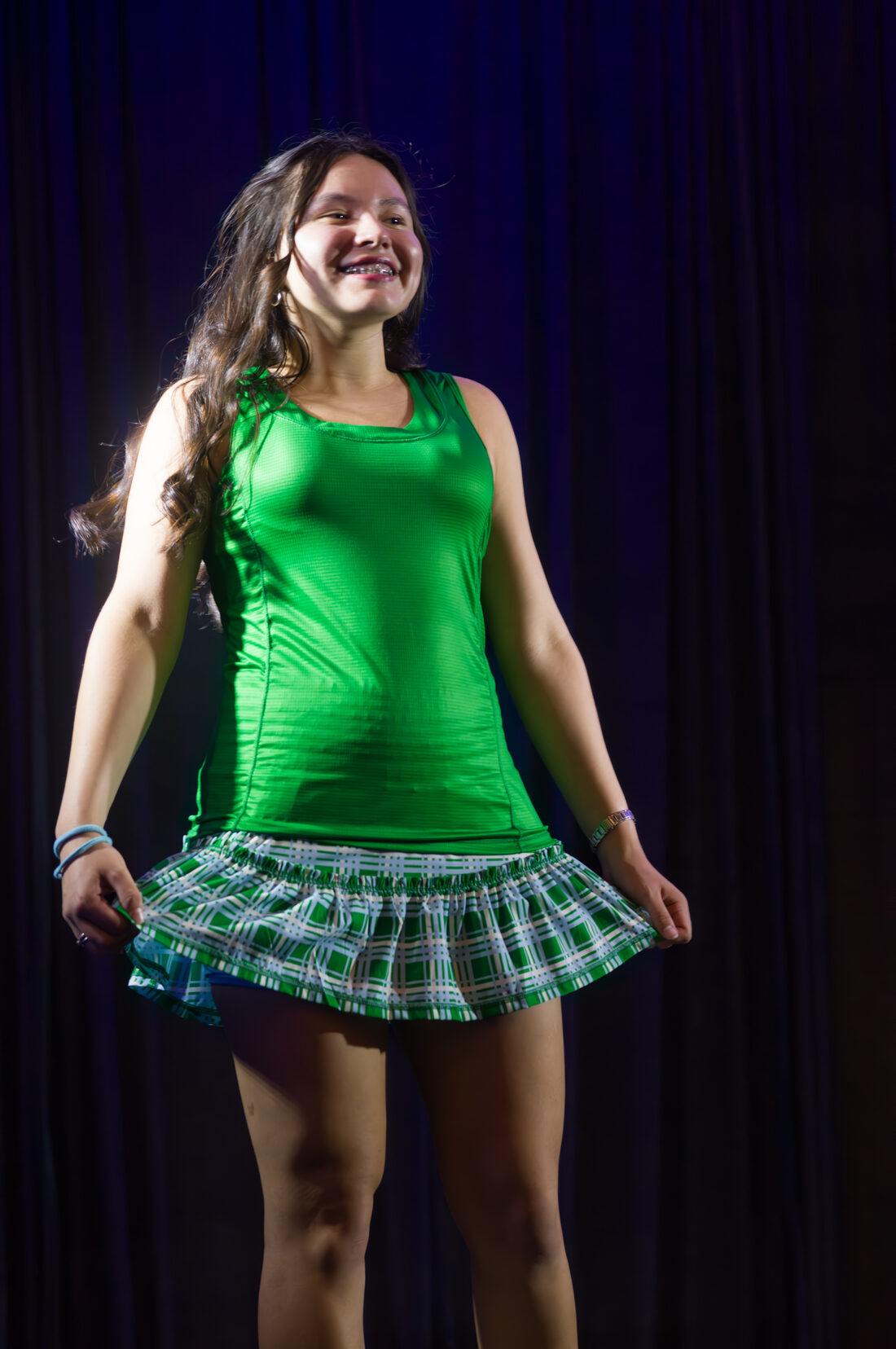

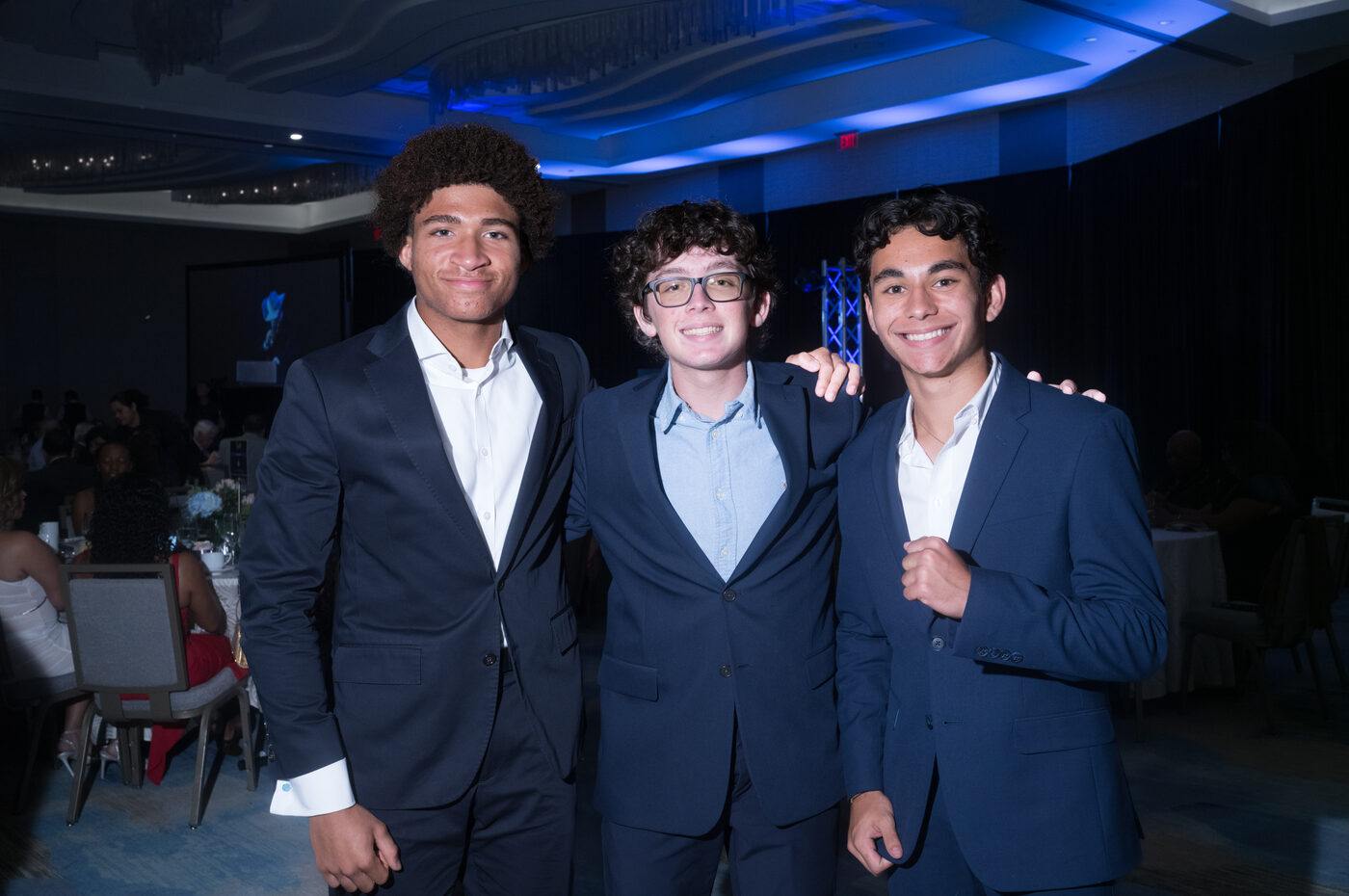
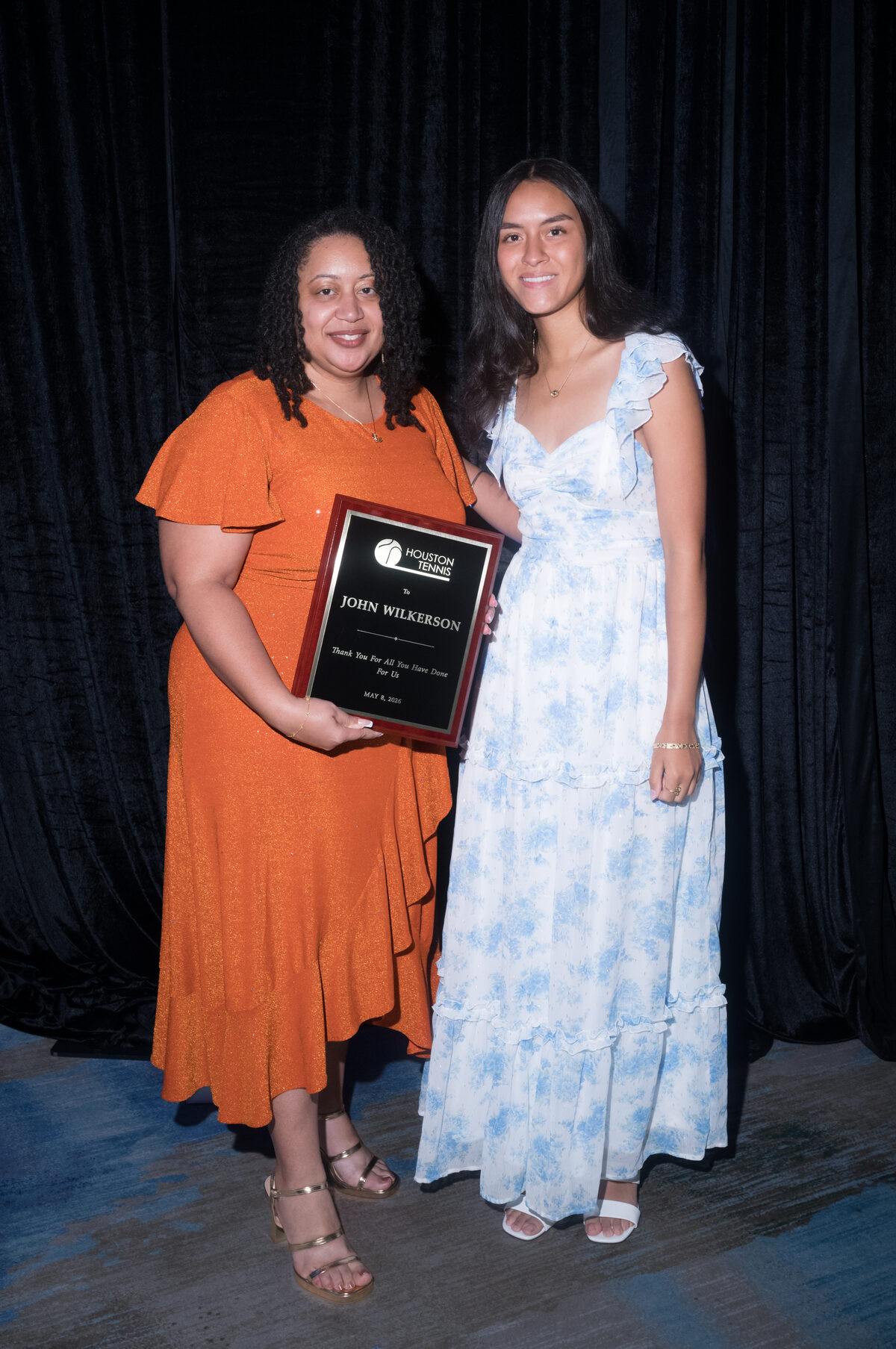
Gala XIV photography by Daniel Ortiz. Film by Johnny Lu.
The fifteenth
Sponsorship, underwriting and auction gifts are open now. Tables and individual tickets go on sale later.
New this winter
Singles matches you arrange yourself, against players at your level, on your own schedule. No fixed league night, no team to join, no captain chasing you for availability.
Joining
Flex runs entirely in USTA’s own app. There is nothing to register for on this site.
Questions about the app or your account go to USTA at customercare@usta.com. Questions about Houston tennis come to us.
Who it suits
You and your opponent agree a time and a court between you. Mornings, evenings, weekends — whatever both of you can actually make.
You are grouped with six to eight players of similar standard, so matches are competitive rather than a formality in either direction.
Most of our league play is doubles. This is the straightforward way into singles without committing to a team season.
Home / Register
Every way to register with HTA, in one place. Most links open USTA Serve Tennis or our youth site, which is where the sign-ups actually live.
Adults, 18 and over
Thirty‑one divisions by level and night. If you do not know anyone on a team, write to Melinda first and she will place you.
Sanctioned adult draws across Greater Houston, with entry deadlines on each listing.
Red ball for adults. Wednesdays 5.30–6.30 pm at Westpark, $30 for four sessions, racquets lent.
A morning on court for a team, shaped around the group size. No registration page — it starts as an email.
Juniors, 4 to 18
Eight neighbourhood sites, twice a week after school, with the ACE enrichment hour beside it. From age six in the school year, from age four in summer.
Ages four to eight. Wednesdays 4.30–5.30 pm at Westpark, $30 for three sessions, racquets lent.
A team, a captain and a match most Sundays. For children who can already rally, serve and keep score.
One‑day Level 7 events for juniors new to tournaments. Orange and green ball.
Not open registration. Players are selected by coach recommendation and Gran Prix participation, four times a year, free.
Everyone
Nothing to sign up for in most cases. Registering for a league or a programme makes you a member, and so does a gift of $20 a year.
Applications open in the spring. For Houston seniors heading to college who are not going on a tennis scholarship.
Stuck on a registration page? The sign-up systems are USTA's, not ours, but we can usually work out what has gone wrong. Call the switchboard on (281) 580‑8313 or write to info@houstontennis.org.
Home / Membership
HTA membership is free. It arrives with league registration, or with a gift of $20 a year. There is nothing else to buy.
Find your row
IfYou play in an HTA or USTA league
IfYou have given $20 or more this year
IfNeither of those is you
Membership means a vote in the association that runs Houston's leagues, tournaments and free youth tennis. It is not a mailing list and it is not required to play.
The part that does cost
Two fees, and only one of them is ours. Worth separating, because together they look like one number.
Required for league play, and it has to run past the end of your season. Three years is $119, five years $176. This is not HTA's money.
Enter two leagues, pay it twice. Non-refundable once you are on a roster, and it is what carries the free youth program.
Children pay nothing at a park site. Free youth tennis and the ACE enrichment hour cost families nothing and need no USTA membership. None of the above applies to a child starting out.
The 1952 Society
The gala is one night in February. The association runs fifty‑two weeks. A league match in July, a resurfaced court in March, a season still running in October. Each was paid for before it happened, and that is what a standing gift does that a one‑off cannot.
The 1952 Society is the circle of people who give that way, named for the year the association started. We are opening it for the seventy‑fifth, and it stays open long after. A Society gift supports the whole organization, and there are two ways in.
Two hundred and thirty-four dollars across the year, in payments you will not feel. The door most of our members walk through.
The founding year, once. The same circle, the same name, written in a single stroke.
Both carry the name. Anything below it is a Sustaining Donor, and just as welcome. The Society is simply the rung that has a name on it.
What it holds up
Every gift is tax‑deductible, cancellable in one message, and never passed to anyone else. Twenty dollars a year is the point at which you also become a voting member of the association.
If you want to do more than belong
Any amount, one-off or recurring. Five dollars a month, seventeen cents a day, is the figure we ask for by name, because money that arrives reliably is worth more than money we hope for.
HTA is a 501(c)(3) nonprofit corporation. Donations are tax deductible to the full extent allowed by law, and a receipt arrives by email.
Four questions
No. Membership is a consequence of playing, not a condition of it. What you do need for league tennis is a current USTA membership.
Yes. Give $20 or more in a year. Plenty of members are parents, alumni and neighbours who have not held a racquet in decades.
No. There is no premium tier and nothing to upgrade to. Giving more funds more tennis; it does not buy a better membership.
Any time, without a conversation. Email info@houstontennis.org and it is done the same week.
